
Five Nights at Shreks Hotel
 friv.org.es
Sign in to keep recently played games, favorites and your player profile available on this site.
Popular Games
Last Played
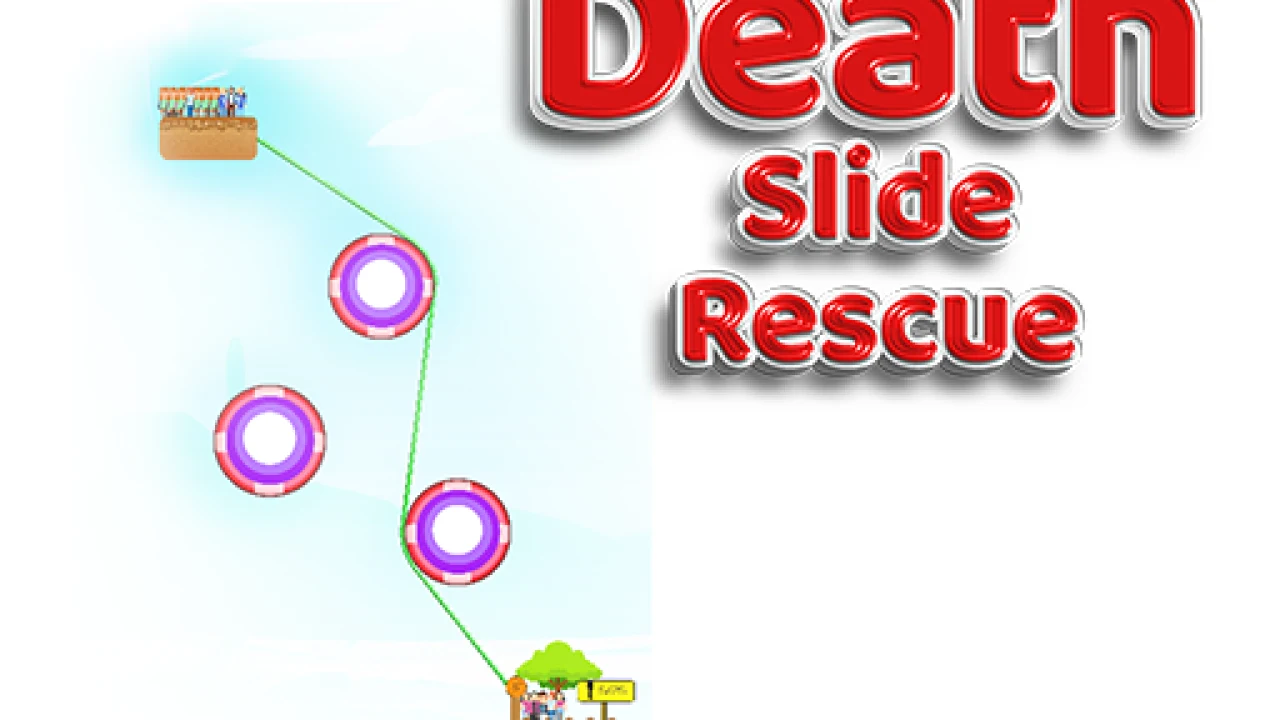
Death Slide Rescue is a hypercasual puzzle game that challenges your logic and spatial reasoning through a unique sliding block mechanic. Players must navigate a grid-based environment, moving pieces strategically to clear a path and save the character in peril. This page serves as your ultimate guide, breaking down the core concepts and strategies needed to master its levels. Whether you are looking for a quick mental exercise or a deep dive into the mechanics, you will find useful insights here to improve your performance and enjoy the arcade-style challenge.
The heart of this title lies in its intuitive yet tricky control scheme. Unlike traditional puzzle block games where you simply match colors, this experience focuses on movement and trajectory. You are presented with a confined grid containing various obstacles and a specific target path. The primary mechanic involves sliding tiles or the main character across the board, often requiring you to think several moves ahead to avoid getting stuck against walls or immovable objects.
Success depends on understanding how different pieces interact with one another. Some blocks may slide freely until they hit an obstruction, while others might serve as permanent barriers that you must navigate around. The game strips away complex button combinations, relying entirely on directional swipes or clicks to execute moves. This simplicity makes it accessible, but the increasing complexity of the grid layouts ensures that the challenge remains engaging for players seeking a logical test.
| Feature | Details |
|---|---|
| Gameplay Style | Logic-based sliding puzzle |
| Controls | Swipe or directional input |
| Session Pace | Short, bite-sized rounds |
| Device Fit | Mobile and Desktop browsers |
| Category Focus | 1 Player Arcade |
The overarching goal in every stage is to facilitate a safe exit. While the mechanics are rooted in puzzle logic, the thematic element of rescue adds a layer of urgency. You aren't just clearing lines; you are actively manipulating the environment to create a safe corridor. This objective often requires clearing debris or moving obstacles out of the way before the path can be opened. Pay close attention to the exit point's location, as it dictates the direction of your strategy.
Often, the solution involves clearing a specific area of the board first to create "working space." Beginners might try to rush directly toward the exit, but this frequently leads to a dead end. Instead, focus on the immediate surroundings and identify which blocks are restricting movement. By systematically removing these impediments, you naturally guide the path toward the rescue point. This methodical approach is essential for higher difficulty levels where the grid becomes crowded.
Although categorized as hypercasual due to its pick-up-and-play nature, this game rewards patience over speed. The tag "Logical" is well-earned, as impulsive moves can quickly ruin a level's potential. A strong strategy involves visualizing the final state of the board before making your first move. Ask yourself which blocks need to move and in what order to achieve that result.
One effective technique is to work backward from the goal. Identify the final position required for the rescue and determine which obstacles are blocking that specific line. By isolating these key blockers, you can prioritize your moves. Additionally, try to group similar movements together. If multiple blocks need to move in the same direction, do so in a sequence that prevents them from trapping one another. This kind of foresight transforms the game from a trial-and-error frustration into a satisfying mental exercise.
The "puzzleblock" aspect of the game introduces varied element types that keep the gameplay fresh. You will encounter standard sliding tiles, but also stationary blocks that serve as anchors for your strategy. Learning to distinguish between movable and fixed objects is the first step to mastery. The game often places fixed blocks in positions that seem unhelpful, but they actually serve as crucial stopping points for your sliding pieces.
Use these stationary objects to your advantage. Instead of viewing them as hindrances, see them as tools to halt a sliding block exactly where you need it. For example, if you need a block to stop in the center of a row, look for a fixed object behind it that will naturally catch it. This interaction between dynamic and static elements is the key to solving the more complex grids without wasting moves.
As an arcade-style title, the game is designed for repeated play sessions. The levels are structured to be solvable in a few minutes, making it perfect for quick breaks. However, the "1 Player" focus means the difficulty scales based entirely on your own progression. There is no external pressure from opponents, allowing you to take your time and perfect your solution.
To get the most out of the arcade experience, focus on efficiency. While there may not always be a strict move counter, solving a puzzle in fewer steps is inherently more satisfying. Challenge yourself to find the optimal path on the first try. This self-imposed challenge adds significant replay value, as you can always return to earlier levels to see if your improved understanding of the mechanics allows for a cleaner solution.
In a market flooded with match-three games and endless runners, this title carves out a niche by focusing on pure logic. It respects the player's intelligence by providing levels that require thought rather than reflexes. The "Rescue" theme provides a clear, relatable goal that makes the abstract puzzle elements feel more grounded and purposeful.
The visual clarity of the game also contributes to its appeal. The interface is clean, ensuring that the puzzle state is always readable. You never have to guess which block is which or where the exit is located. This transparency allows you to focus entirely on the logic of the solution. If you enjoy games that offer a "eureka" moment when a complex grid finally unravels, this is a title worth your time.
Ready to test your wits? The best way to understand the nuances of the sliding mechanics is to jump in and play. The early levels serve as an excellent tutorial, gently introducing new concepts without explicit text instructions. You can experience the satisfaction of clearing your first difficult grid by heading to the game right now. Click here to play Death Slide Rescue and start your journey through these logic-based challenges.
Is this game suitable for children?
Yes, the game is very family-friendly. It features no violence or complex themes, making it appropriate for younger players who are developing their problem-solving skills.
Do I need to download anything to play?
No, this is a browser-based game. You can play it directly on your device without installing any apps or software.
Are there time limits on the levels?
Generally, the game focuses on move efficiency rather than strict time limits. This allows you to think through your strategy without the stress of a ticking clock.
Can I save my progress?
Progress is typically saved automatically in your browser. As long as you use the same device and browser, you should be able to pick up where you left off.